
How to Treat Knee Pain like a Pro
- Katie Brierley, M.Ost, M.Sc., B.Sc. (Hons)

- Jan 15
- 3 min read
Updated: Feb 9
When my knee flared up, I did something unconventional by traditional standards. The results were magic, and it was a gentle reminder that the most powerful rehab step can often be the simplest one.
When Pain Shows Up Uninvited
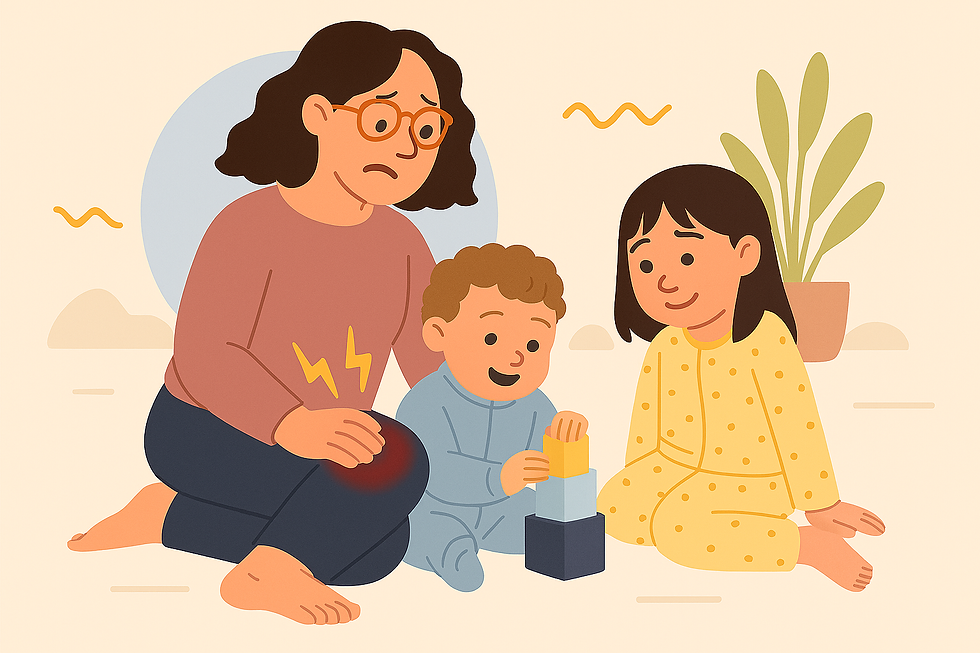
This morning started like most others, except for one tiny detail. I woke up with an annoying ache on the outside of my knee. Nothing dramatic, just enough to make me grumble while getting the kids ready for the day. It felt tight, achy, and frankly, it wasn't something I wanted tagging along with me all day. I started wondering if it was safe to keep using it or if I should rest my knee and take it easy.
So I did what I would do if you walked into clinic with the same complaint. I ran through a quick assessment:
Falls or impacts to the area? Nadda (unless you count waking up with a 3-year-old sprawled across my leg 'trauma')
Swelling or redness? Nope
Range of motion? Excellent
Clicking, popping, or giving way? Thankfully, not
Weird sensations or shooting pain? Negative
Feeling good otherwise? Oui!
There was nothing to suggest that my knee required immediate medical attention or needed to be immobilized. Now what?
Movement as Medicine
So what did I do? I went for a walk.
Just a regular 20-minute stroll with my AirPods in and a podcast playing. Nothing fancy. Just me, moving like I normally would at a pace that felt comfortable. And here’s the kicker. About two-thirds of the way in, the pain vanished. Poof. Gone. Like magic. And it hasn't come back since.
That moment stayed with me. Not because the pain vanished, but because it reminded me of the amazing things happening behind the scenes when we're hurt. It was a quiet reminder of how powerful simple movement can be. So I decided to share this story with you because chances are, at some point, you'll wake up with a mysterious ache and wonder if it's safe to keep moving too.

Pain Science: Reframing the Fear of Movement
It wasn’t magic that took my pain away. It was neuroscience.
We know from my rapid assessment that there wasn't anything structurally wrong with my knee. While there was no obvious cause of my knee pain, I did spend most of the night sleeping with a toddler so it's safe to assume I didn't have the most restful sleep of my life. The fact that I only move to chase my children these days probably doesn't help my overall well-being either.
In addition to twists and bumps, things like fatigue, lack of exercise, poor nutrition, hormonal status, and emotional well-being can make our joints prone to aches too. It can scramble up our internal wires, which makes our brain put up caution tape in funny places. That's why treating these other factors is sometimes the best management strategy for aches that come out of nowhere.
Pain doesn't always mean damage. Sometimes it's just your body's way of saying, "Hey, I need a little attention."
When I went for a walk, I gave my body some much needed movement in nature while my favourite podcast eased my burn out. It also sent a reassuring message about my knee to my nervous system that said, "Everything's okay down here." My brain saw a happy knee and a relaxed me and decided it was safe to pull the caution tape down. This non-threatening, low-impact movement was powerful enough to recalibrate my brain's perception of what should and shouldn't cause pain.
These are relatively new concepts in the rehab world, so it may contradict everything you thought you knew about pain. The takeaway here is that pain doesn't always mean damage. Sometimes it’s just your body’s way of saying, “Hey, I need a little attention.” And often, that attention can be as simple as a walk around the block.

What “Treating It Like a Pro” Really Means
So if you ever wake up with a mystery ache and your body checks out okay, don’t be afraid to move. Don’t push through pain or ignore it. Meet it with curiosity and compassion. Sometimes a short walk, a deep breath, and a little trust in your body’s resilience is all it takes. Pain isn’t always a red flag. Sometimes it’s just a nudge. And if you’re unsure whether movement is safe or what kind of activity makes sense for your situation, come see me. I’ll help you sort through the signals and find a plan that feels right for your body.

